Our Story
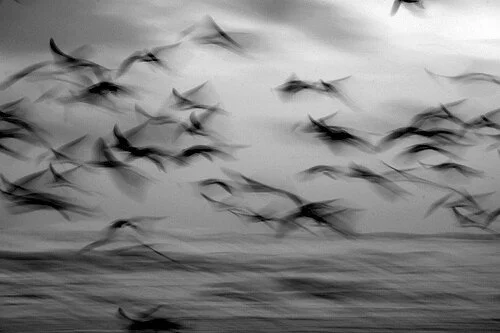
Silence of Sound Studios was created from a deepening awareness of sound as something that moves beneath thought—shaping the body’s internal rhythm, attention, and sense of safety in ways that are often felt before they are understood.
Founder Lhasa Cue began her work as a music producer, drawn to sound as a creative and expressive medium. Over time, a profound physiological experience in early adulthood shifted this relationship, where sound moved from composition and performance into something far more immediate—something that interacts directly with regulation, perception, and recovery. In that collision between creative practice and lived experience, the therapeutic potential of sound became inseparable from its artistic form.
From this point forward, her focus turned toward the vagus nerve and its role within the autonomic nervous system. As a key communication pathway between brain and body, it shapes how we move between states of activation and rest. Contemporary research in auditory neuroscience and psychophysiology suggests that rhythm, frequency, and natural acoustic environments can gently influence this system, supporting regulation, coherence, and restoration.
Despite this growing body of evidence, the science behind sound is still widely misunderstood or overlooked. Sound therapy is often dismissed as unverified or purely experiential, yet fields such as sonic ecology, neurophysiology, and environmental psychology continue to demonstrate its measurable influence on stress regulation, attention, and emotional state. A central part of Lhasa’s work is to bridge this gap—bringing awareness to the research that shows sound is not abstract or symbolic, but physiological and environmental in its impact on the nervous system.
Within this understanding, sound is not treated as background or atmosphere—it is a direct environmental input that the nervous system is continuously interpreting. Silence of Sound Studios emerges from this intersection, where sound is both studied and experienced as an ecological and embodied force rather than a purely aesthetic one.
Grounded in principles of sonic ecology, the studio draws on the quiet intelligence of natural sound environments. Water, wind, and birdlife are not referenced as imagery, but engaged as systems the human body is biologically attuned to recognise. Research in environmental listening supports this relationship, suggesting that exposure to non-threatening natural soundscapes can reduce cognitive load and assist in restoring attentional balance.
Silence of Sound Studios exists in this space between science and sensation—where sound is composed with restraint, allowing the listener’s system to soften without instruction, and recalibrate without force.
At its core, it is an ongoing exploration of listening as return—not as effort, but as a gradual coming back to presence, to the body, and to the subtle intelligence of sound itself.